|
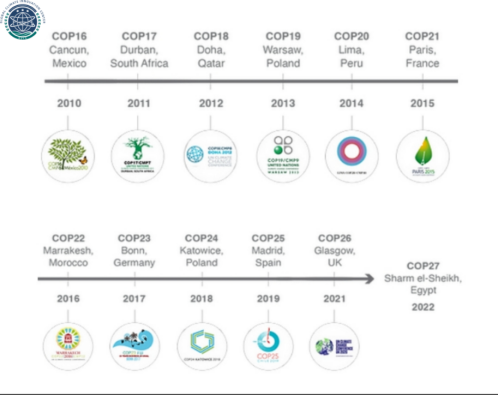
A Close Look at the World Climate SummitOn November 12-13, 2022, GCIC delegates participated in the World Climate Summit at the Twenty-seventh United Nations Climate Change Conference (UNFCCC), where they listened to discussions on climate change from representatives of various sectors of society. Held annually, the World Climate Summit-COP is the premier forum for business and investment-driven climate change solutions and is recognized as the most important official COP-side event since its launch in 2010. The summit, following the global Climate Change Conference from Grasse to Sharm el-Sheikh, focused on efforts to achieve a net-zero economy. The summit brings together leaders from government, business, civil society, international organizations and academia to discuss key issues affecting public and private sector stakeholders in the transition to a low-carbon economy, while achieving the Paris Agreement goals and Sustainable Development Goal 2030. The Investment COP, as an important part of the summit, is a platform for cross-sectoral collaboration and solution-focused approach. It brings together asset owners, asset managers, businesses and governments to develop investable markets and climate solutions.
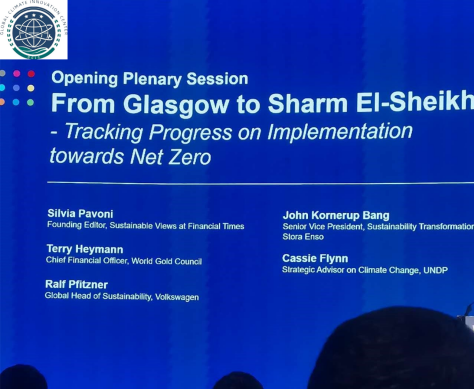
‘Debaters’ at the World Climate Summit The summit brings together climate elites from politics and business: Cassie Flynn, strategic advisor on climate change; John Kornerup Bang, Senior Vice President for Sustainable Transformation at Stora Enso; Grace Fu, Minister for Sustainable Development and the Environment of Singapore; Ralf Pfitzner, Head of Sustainable Development at Volkswagen, Terry Heymann, Chief Financial Officer of the World Gold Council, Silvia Pavoni, Founding editor of Sustainable Views, and Lord Turner, Chairman of the Transboundary Alliance's Energy Transition Committee...
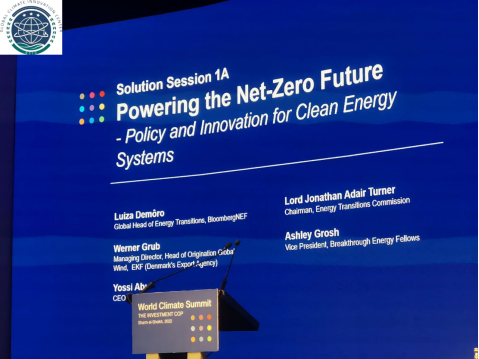
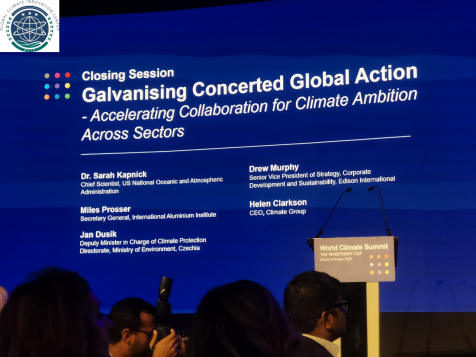
Energy Transformation Lord Turner, chairman of the Energy Transition Committee, pointed out that many companies are making progress in the energy transition, but they still need support in terms of technology and funding. Innovation is key to optimizing the use and source of energy. Therefore, in the path of green transition, technology companies have a big role to play. In terms of source, we need to first reduce the use of fossil fuels. Fossil fuels have long been recognized as the largest source of greenhouse gases, so we need to gradually eliminate the use of coal. Natural gas has long been regarded as a cleaner source of energy, but methane contributes 25 percent of greenhouse gases, second only to carbon dioxide. Also, with emissions rising year by year, there is a need to do more to reduce methane emissions. Energy transition is not limited to individual companies, but also needs to be supported by stronger cooperation. As Drew Murphy, senior Vice President of strategy, corporate development and sustainability at Edison International, points out, "Solar panels, wind power installations, etc., all require international supply chains, so cooperation among countries is important, especially in technology development and manufacturing. Universal Climate Adaptation Climate change is happening and its consequences vary around the world. It could mean fires, floods, droughts, hotter or colder weather, or rising sea levels. In addition to doing all we can to reduce emissions and slow down the pace of global warming, we must also adapt to the consequences of climate change so that we can protect ourselves and our communities. The solution to climate change lies in our daily lives. Thus we now need a change in our willingness and practice greener ways of living and producing. Jan Dusk, the minister of Environment of the Czech Republic, recalling the over a dozen COP sessions he has participated in, said "In the past, the projects were mostly driven by the government. I am glad to see that more and more NGOs and enterprises are joining the ranks to together contribute to the reduction of greenhouse gas emissions." We need everyone to learn how to live a low-carbon life in their daily lives. This is the best way to curb climate change. Deliver on the Promises of COP26 The 26th session of the COP in Glasgow showcased the leading role of non-state actors in the area of climate change. However, more ambitious action and rapid implementation of commitments are essential to keep global warming below 2°C. Businesses, governments, financial actors and international organizations need to translate the ambitious climate commitments they made in Glasgow into concrete action plans so as to lead the global transition towards a net zero economy. The energy sector remains a major contributor to global emissions that lead to climate change. Therefore, high-end deployment of existing solutions and the development of innovative technologies are essential to meet growing demand and ensure universal access to energy. The textile and apparel industry is facing increasing challenges to reduce emissions. From increasing energy efficiency and the share of renewables to influencing consumer demand patterns, a decisive and concerted effort is needed across the value chain to realize the transition. Through clear commitment, bold action and strong partnerships, brands and retailers have a vital role to play in facilitating these changes. Renewables dominate investment in new power generation, according to the International Energy Agency. But increased investment in power grids and energy storage solutions is just as important to facilitate the transition to net zero by 2050. Only by breaking down barriers and promoting cross-sectoral partnerships can we achieve effective responses to climate change and resilience. In the short - and medium-term future, we need to form strong coalitions to deliver on their commitments to curb greenhouse gas emissions.
|